



There are some advantages and disadvantages to using both electric and internal combustion (IC) trucks.
Electric engines cost less to maintain during their life span as they need less maintenance. The battery should last at least five years if the manufacturer's charging and maintenance guidelines are followed. Overnight charging expenses are normally low. Electric trucks tend to be compact units and highly maneuverable, specially the types with three wheels. Drive, tilt, lift, acceleration and auxiliary speeds are adjustable and could be changed depending on the preferences of the driver and the use. Electric trucks are not noisy, and are easier on the environment.
Not suitable to be used during wet conditions are electric trucks. Because of the need for battery recharging, they cannot be utilized continuously. They are not suited to rough terrain. The energy consumption is high on ramp work and continuous high lifts.
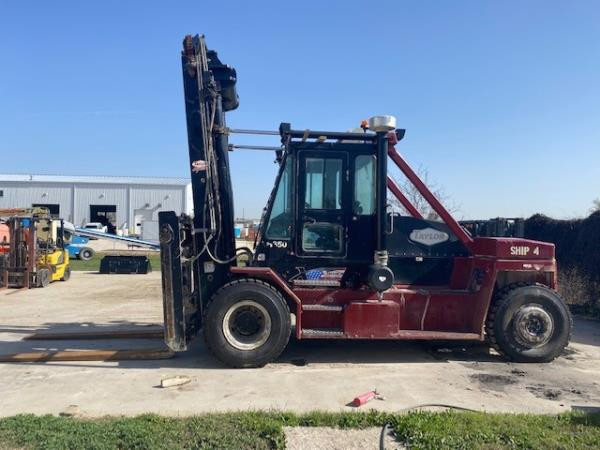
Best to be continuously utilized outdoors and on surfaces that are not even is the advantage of an IC engine diesel/LPG. With no requirement for battery charging, the forklift can be used throughout the evening and overnight. Supply and transport of fuel must be factored into expenses. Initial expenses are less than for an electric truck, but long term expenses connected to fuel and maintenance are higher. IC engines have larger capacities than electric, but less adaptability. LPG can be used in several indoor applications. IC Engine diesel/LPG produces more noise and higher emissions compared to electric. LPG has lower emissions than diesel.