







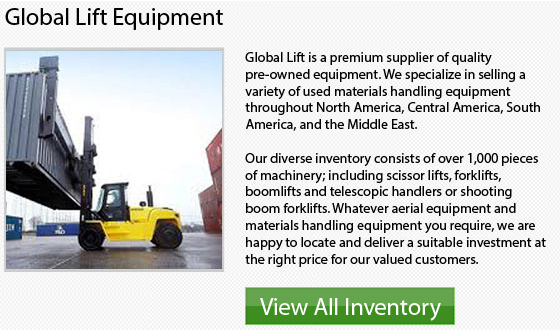
There are 7 different classes of forklifts available on the market. Several classes, like IV, III, II and I are specially engineered and designed to be used indoors on smooth surfaces. They could be chosen for particular factors of recycling that occur in those kinds of environments. For more rigorous outdoor recycling applications, categories V and VII forklifts are usually utilized.
Numerous companies have several or all of their applications outside and need to handle workloads considered extreme. Their forklift selection will gravitate toward Internal Combustion equipment in Class VII and Class V. These models work really well in any weather and have an adequate amount of power to run heavy objects during the course of a shift.
Using a forklift safely is another vital thing to take into consideration. Understanding and acknowledging the center of gravity is really essential when operating a forklift, particularly while traveling on uneven terrain. Recognizing the stability triangle in these tough work situations is also imperative.
Warehouses, manufacturing operations, and the supply area for numerous textile firms could have various types of reach trucks. Utilizing a reach truck to store finished goods on pallets, a range of materials and other pieces of machines is common. These kinds of machines help in keeping a facility organized and allow them to use the maximum amount of area by stacking vertically. Reach trucks are quite easy to operate. They can help make better use of both available storage area and time.
It is extremely better to purchase a new lift truck if you are going to need the forklift for 4 to 8 hours per day. With such continuous use, the warranty alone can come in handy. If, however, you are only unloading and loading on a bi-weekly basis or not very often, then a second-hand unit can be suitable for your requirements. Each and every situation is different and you should evaluate your personal needs prior to selecting a suitable machinery.