




To make sure that safety is a top priority, there are 5 important steps. To be able to make sure that the unit is visually safe, the first step is to perform a Walk-Around Inspection. After that check if the worksite is safe to operate in with a Worksite Assessment. The Function Test is the third step so as to know whether or not the unit is safely functioning. The 4th thing to consider is Proper Operation, in order to know whether or not the unit is safely working. Last of all, Proper Shutdown needs to be checked so as to make certain the unit is capable of shutting down correctly and is in a safe place.
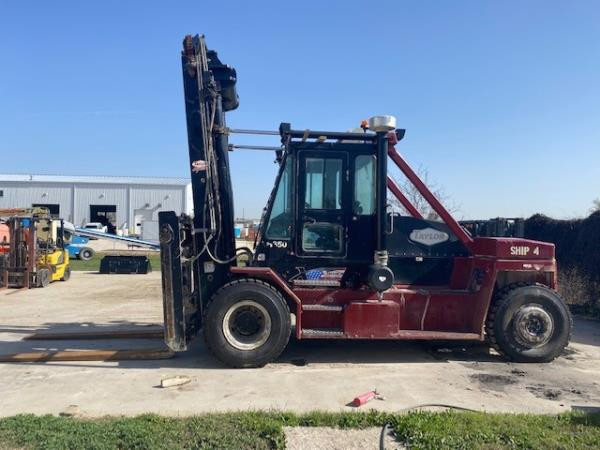
At the center of the 5 steps and this regulation, there is a machinery that stands on a triangular footprint and lifts heavy weights to impressive heights. The key goal is to be able to keep the telehandler upright, but of course there are risks.
The two front wheels, and the rear-axle pivot point make up the telehandler's triangular base. Usually the back axle oscillates and therefore, the back wheels are not a part of the base. The telehandler remains upright so long as the center of gravity of the equipment, which is defined as the point in 3 dimensions around which the machine's weight is balanced, stays oriented inside the stability triangle.
When a load is placed on the forks while the boom is down, the center of gravity down and forward. The load if lifted would change the center of gravity to the rear upwards. At the same time, the stability triangle shrinks when this happens. Hence, the higher you lift a load, the less of a margin for error you have since the stability triangle lessens.
With a small but stable stability triangle, it leaves less room for the center of gravity to move right or left. This wandering action could change the stability triangle, leaving less room for the frame to remain balanced if it is not perfectly level. For instance, imagine the center of gravity resembling a plumb bob hanging from the boom. You would always be able to find the center of gravity someplace on a totally vertical line between a point on the boom and the center of the ground. If the frame is not level, the center of gravity would not be oriented over the centerline of the equipment. The stability triangle is always aligned with the centerline of the machine.