







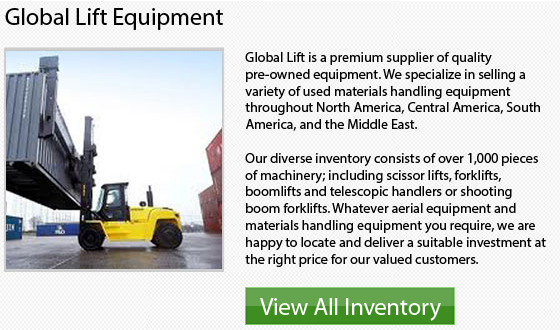
Even though sales volumes have usually been small, about 1% to 5% of the international forklift market; side-loaders have become the paramount choice of equipment within the material handling industry for dealing with unconventional loads in a simple manner.
Usually, side-loaders are used in the aluminum, timber, glass, steel, construction and aviation industries. In addition, they are used in businesses that are making unconventional objects including windmill arms and moldings. Basically any business that produces oversized long or awkward objects uses the side-loaders.
Side-loaders were originally designed in the beginning of the 1950s by Henry Le Grande Lull from the Lull Manufacturing Company. These models were designed in response to a request from the United States Air Force. The initial concept was patented for commercial utilization but it was not developed until Lull Manufacturing was taken over by the Baker Raulang Company in 1959. It was Baker Raulang who made the design. Later, the name was changed to Baker Traveloader. In the latter part of the 1950s, the side-loaders were introduced to Europe. The early models were made by Italian manufacturer Fiora and the afterwards B-P Battioni e Pagani who pioneered the machine's use within timber yards.
Side-loaders vary a bit from forward traveling, counterbalance forklifts in that they have their forks situated on the side of the machine. The operator drives the machinery sitting in a cabin like a conventional forklift. The loading, unloading and lifting functions are performed by the mast situated at the right-hand side of the driver. The load is typically transported lying on a wooden or metal deck. This helps to decrease stress, distortion and damage to the load. New innovations to the side-loader design have incorporated a huge variety of lifting accessories being developed.
Some of the benefits of using side-loaders over reach-stackers or traditional forklifts comprise: improved visibility, safer operating conditions, and faster traveling speeds as well as the ability to use available space more effectively.
Only when you assess your work setting and types of applications you will be putting your equipment through, would you be able to accurately determine the best type of machinery to complete your tasks. There are a few good rental choices available too in order to determine the right kind of machine to accomplish your requirements. Doing some research on the Internet or talking to a reputable dealer is one more good way to get some information also when trying to figure out the best alternative.