



Performance
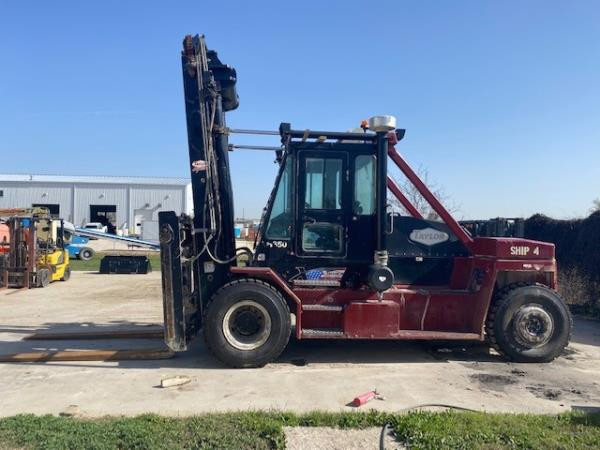
The overall result of how well the machine's functions work together is categorized by the performance of the machine. The overall effectiveness of the machinery is determined by a combination of user-friendliness, capacity, visibility and lifting speed.
The engine and the machinery working hydraulics undergo extreme lifting, that puts intense demands on the machinery. The lifting component is just a part of the operating cycle. Prior to the machine being able to unload or load, the demands are placed on effective brakes, tight turning radius with precise control and high pulling power. All of these functions have to be able to operate in an optimum manner, even after heavy usage.
Engine
Each and every unit of empty container handlers are outfitted with straight six cylinder turbo charged engines which are equipped with intercooler. The engines are adapted to the specific working conditions of empty container handling. These conditions consist of high power and high torque levels at low engine speeds.
Now within the industry, the engines of current units comply with the stringent legal environment demands. The engines offer low exhaust emission levels, low vibration and noise levels, low fuel use characterize all engine options.
Transmission
All container handlers have been built with extremely durable hydrodynamic transmission systems. For quick acceleration with a minimum of "clutch-slip" the transmission has integrated torque converter and gearbox. The gear changing is electrically accomplished via solenoid valves. These offer 3 forward and 3 reverse gears that are controlled by means of a multifunction lever that is easily operated.
Drive Axle
The rugged drive axles have engineered to handle the different working settings in terminals and ports. All axles have reduction in 2 stages - differential and hub reduction. These features ensure a minimum of strain on the transmission system. Moreover, the drive axles are fitted with a hydraulic braking system.
Service Brake System
All empty container handlers have wet disc brakes with oil cooled discs which are alternately fixed to and rotating with the hub. The disc brakes are pressed together by hydraulic pressure from the brake pedal, when the brakes are engaged. This offers efficient braking to the unit. The system could cope with heavy cargo over a long period of time and is practically maintenance free. This particular system offers no fade and requires no need for brake adjustments.